01 / KNOWLEDGE
Understand the systems
Recognize how green stormwater practices function, what can go wrong, and why maintenance matters.
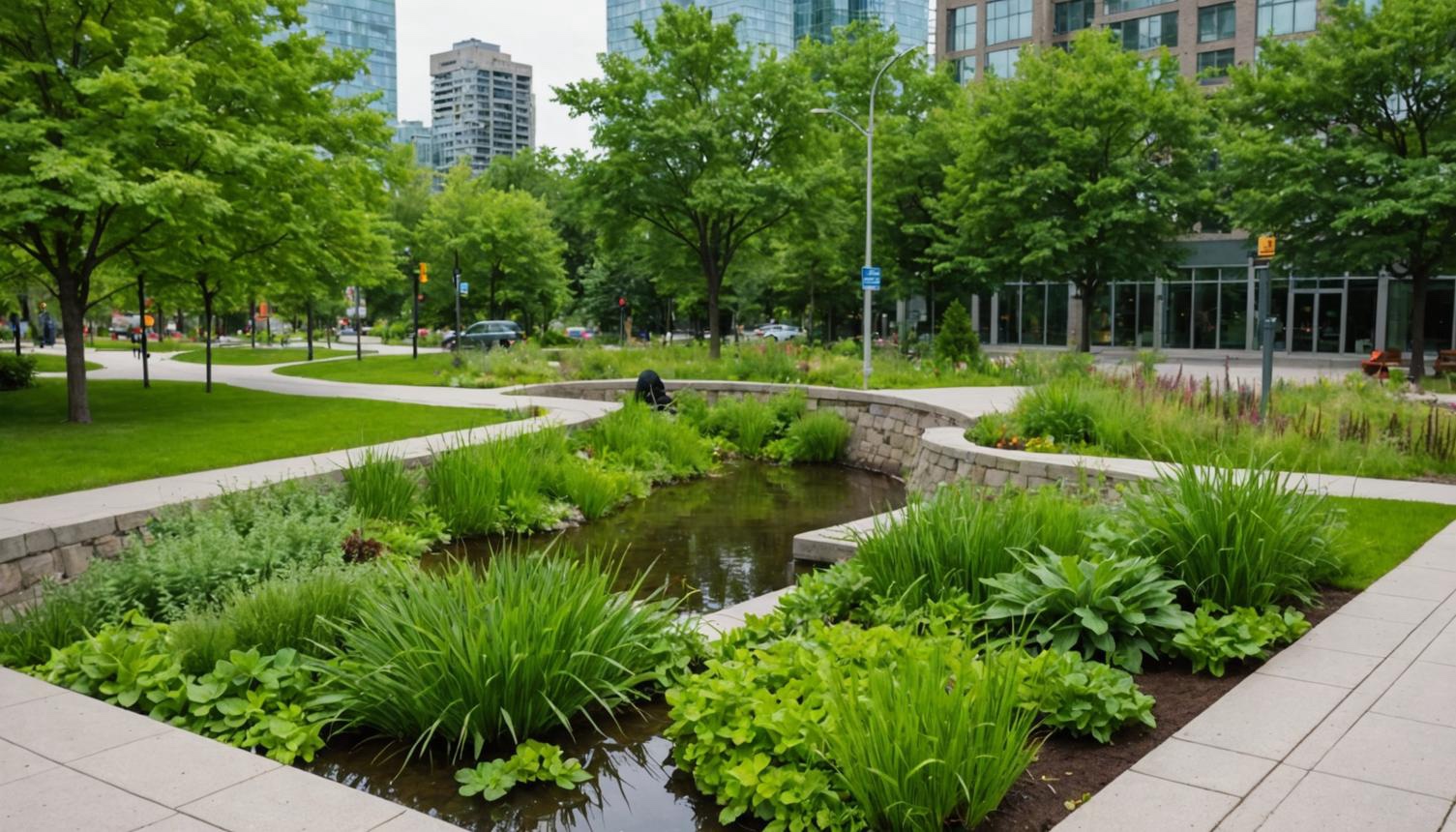
Building practical inspection and maintenance skills to support healthier waterways, resilient communities, and lasting stormwater infrastructure performance.
Request information or assistance ↓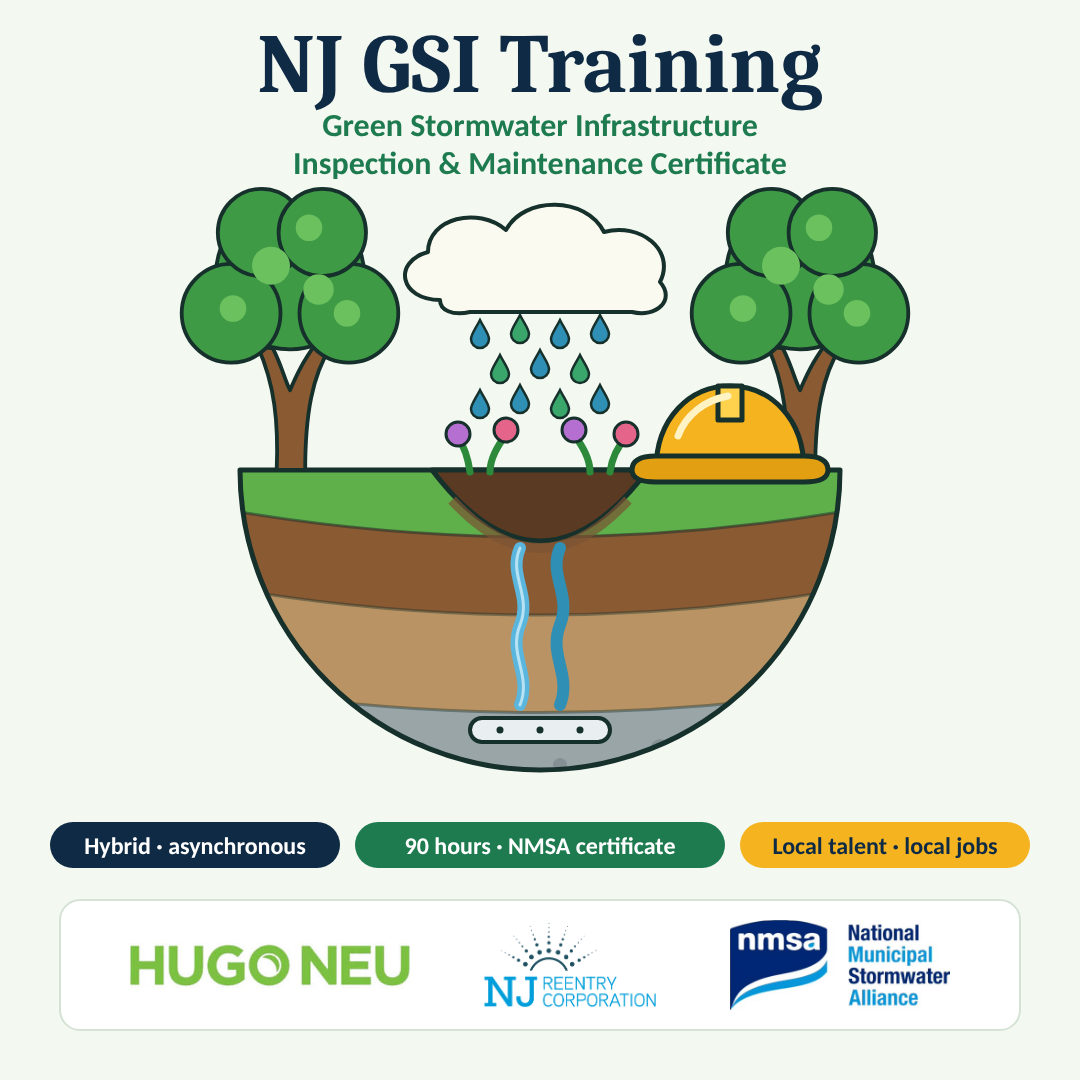
Program collaborators and grant support are listed below, including NJEDA, Rutgers Cooperative Extension, and UNH Cooperative Extension.
Green stormwater infrastructure can help manage runoff and protect water resources. Its performance depends on effective inspection, routine maintenance, and a trained workforce. The NJ GSI Training Program is focused on connecting those needs.
Recognize how green stormwater practices function, what can go wrong, and why maintenance matters.
Build applied skills for identifying maintenance needs and supporting ongoing performance.
Support cleaner water, better asset stewardship, and workforce opportunities across New Jersey.
The NJ GSI Online Training Program connects technical skills, community upskilling, and career pathways. The 2026–2027 pilot syllabus describes a 90-hour hybrid course, predominantly online, with required in-person field training and final assessment. The current pilot specifically focuses on people re-entering society; broader participation and eligibility are subject to confirmation.
The program also aims to support local community members seeking new skills and municipal maintenance staff—including public works crews, stormwater personnel, and parks and grounds teams—seeking to strengthen inspection, maintenance, and long-term GSI performance. Employment preparation includes job applications, interview skills, and career readiness.
The pilot includes 90 hours of hybrid instruction, mostly asynchronous online coursework, live virtual engagement opportunities, and required in-person training and final assessment. There are no prerequisites. This pilot is designed to help people re-entering society build practical skills and pursue stormwater-related employment.
Online learning plus in-person field experience.
Sequential activities, quizzes, assignments, and a final in-person assessment.
Three professional development hours annually to maintain good standing, plus periodic refresher training.
These dates are taken from the November 2026 pilot syllabus and should be confirmed with program staff before relying on them.
| Module | Topic | Week starting |
|---|---|---|
| 1 | Course Introduction, Stormwater Basics | Nov 16, 2026 |
| 2 | Watershed Dynamics | Nov 30, 2026 |
| 3 | Stormwater Regulations | Dec 14, 2026 |
| 4 | BMPs & Green Infrastructure Foundations | Feb 1, 2027 |
| 5 | SCM Types & Components | Feb 15, 2027 |
| 6 | Soils, Media, Vegetation & Amendments | Mar 1, 2027 |
| 7 | In-person Check-in, Construction/Installation Support | Mar 15, 2027 |
| 8 | Inspection Methods & Checklists | Mar 29, 2027 |
| 9 | Maintenance Practices & Tools | Apr 12, 2027 |
| 10 | Monitoring & Digital Reporting | Apr 26, 2027 |
| 11 | In-person Check-in, Safety & Environmental Compliance | May 10, 2027 |
| 12 | Professional Skills and Job Readiness | May 24, 2027 |
| 13 | In-person wrap-up, GSI field activities and final assessment | Jun 7, 2027 |
Download full pilot syllabus (DOCX)
Syllabus is a pilot document. Some narrative module counts and schedule labels differ and are pending program review.
Instructors: Chris Obropta, PE, PhD (Rutgers Cooperative Extension); James Houle, PE, PhD (University of New Hampshire Cooperative Extension); Seth P. Brown, PE, PhD (NMSA). Program management and support: Dominique Lueckenhoff — Project Manager; Dan Gura, MPH — Administrative and Technical Support.
For course and program questions, use the Request Information or Assistance section. Email the program team at [email protected].
The program aims to serve workforce entrants and reentry participants, local residents seeking upskilling, and existing municipal maintenance staff, including public works, stormwater, parks, and grounds personnel. Landscape and infrastructure maintenance workers may also benefit. Eligibility for the 2026–2027 pilot must be confirmed before applying.
The syllabus provides a pilot schedule from November 2026 to June 2027, including required in-person field activities. Confirm current cohort dates before making plans.
The program is being presented as an inspection and maintenance certificate training initiative. The pilot syllabus identifies NMSA as the certificate issuer and requires completion of sequential coursework, quizzes, and an in-person final assessment.
Email [email protected] for program and partnership inquiries. Partner engagement and referral information will be shared once confirmed.
Interested in the training program, municipal staff upskilling, community participation, or educational partnerships? For training, enrollment, municipal staff upskilling, community participation, or educational partnerships, contact the program team at [email protected]. You can submit a question using the form below or email the program team directly.
Training dates, eligibility, registration, and partner news will be posted once confirmed.
Information site · pre-launch draftThe NJ GSI Online Training Program maintains an independent program identity while recognizing the organizations responsible for grant management, community engagement, funding, and technical training.
Grant Project and Program Manager
Community-Based Organization (CBO) Partner
Grantor
Educational Collaborator, Certificate Issuer, and Technical/Programmatic Support · Represented by Dr. Seth Brown, Executive Director, NMSA
Rutgers University · Educational and Technical Collaborator · Represented by Dr. Chris Obropta
Educational and Technical Collaborator · Represented by Dr. James Houle
Organizational logos and final partner descriptions remain subject to approval.